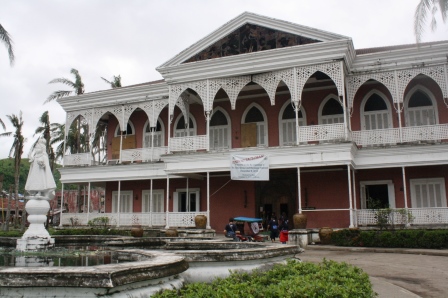
The Sto. Nino Shrine was not the first thing that caught my attention when we arrived in Real Street in Tacloban. Instead, I noticed the palm trees. Their trunks stood battered and bare, with only a few leaves clinging to them. They looked like silent witnesses to the fury that had swept through the city.
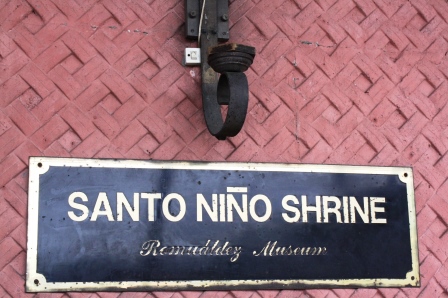
We visited the Sto. Nino Shrine and Heritage Museum during a volunteer trip to Tacloban, just weeks after Yolanda devastated the city. At that time, the wounds left by the super typhoon were still fresh, and reminders of the storm remained everywhere.
Yet, there it stood.
The shrine had reopened its doors after recovering from the damage. Around it, the battered palm trees seemed to tell their own story of survival.
That morning, our visit became more than another stop before leaving Tacloban. Instead, it became a journey into the city’s history, a glimpse into an extravagant past, and a quiet reminder of how much Tacloban had endured.
Stepping Inside the Sto. Nino Shrine
We arrived at around 10 in the morning. It was our last stop before leaving the city, so we walked toward the shrine with the feeling that we were about to see one more piece of Tacloban before heading home.
The museum was open from 8 a.m. to 4 p.m. We paid P200 for five people, plus P20 per person and a P30 camera fee.
As we stepped through the large doors, however, I did not feel like I had entered an ordinary museum.
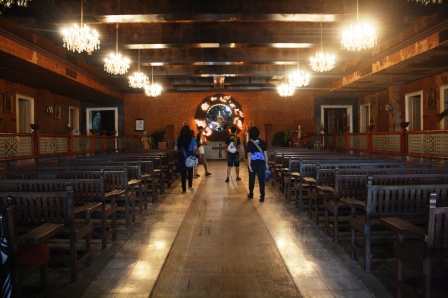
We found ourselves inside a chapel.
At the far end stood an altar with an image of the Sto. Nino, or the Holy Child Jesus. The image rested inside a circular wooden frame and immediately caught our attention.
The walls featured intricate woven woodwork, adding warmth and character to the chapel. Meanwhile, the quiet atmosphere inside felt strangely different from the devastation we had seen outside.
Then, we learned about the story surrounding the image.
According to observers, the image of the Sto. Nino appeared to move toward the door when Yolanda struck Tacloban.
Whether one considers it a miracle or simply a story passed down through the years, hearing it while standing in front of the image made the moment more intriguing.
Rooms Filled With Memories and Grandeur
From the chapel, we started exploring the rooms surrounding it.
Moreover, elevated areas flanked the chapel, with about five rooms on each side. Each room followed a particular theme, creating a different atmosphere as we moved from one space to another.
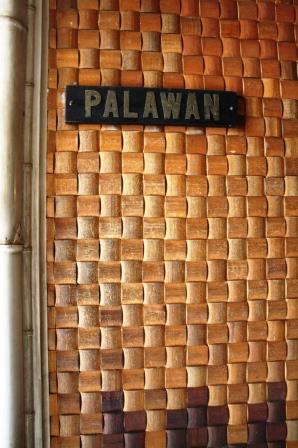
Additionally, there were rooms inspired by Palawan, coconut, shell, Muslim culture, Bicolnon design, capiz, and other themes.
The furniture and decorations changed with every room.
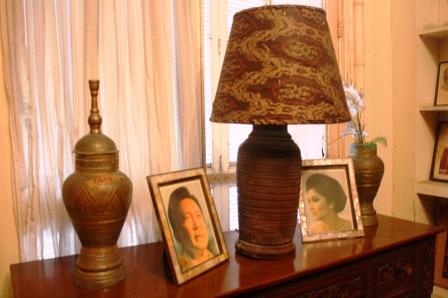
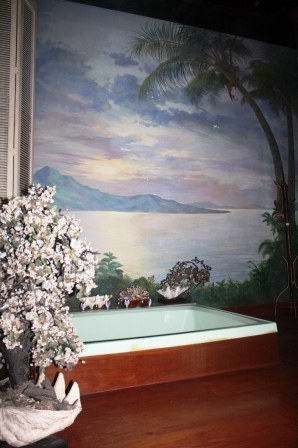
Beds, tables, chairs, bathrooms, artwork, and other furnishings followed each theme. Photographs of former President Ferdinand Marcos and Imelda Marcos also appeared throughout the rooms.
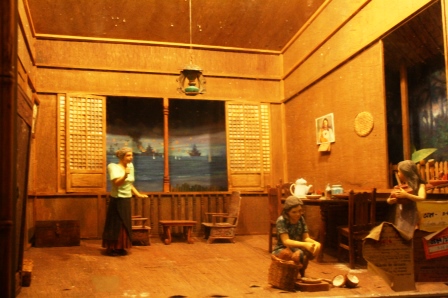
A diorama depicting Imelda’s life provided another glimpse into the family’s history.
As I walked from room to room, I found myself looking beyond the furniture. I tried to imagine the kind of life that once unfolded within these walls.
Everything looked carefully planned.
Everything felt extravagant.
And yet, we had only begun exploring.
A Hallway Filled With Religious Art
The hallway offered another visual treat.
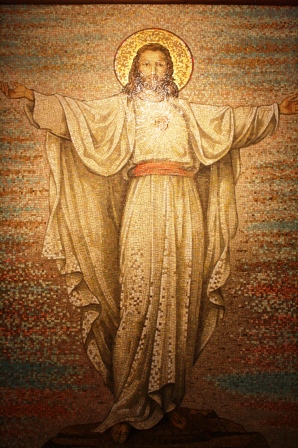
Paintings depicting the Stations of the Cross lined the walls. Then, large mosaic artworks caught my attention.
One portrayed Jesus, while another depicted Mary.
The religious artworks gave the hallway a solemn character. At the same time, their intricate craftsmanship reminded me that the shrine was designed to impress from every angle.
Eventually, the hallway opened into a massive living room.
That was when the scale of the place really began to sink in.
A Living Room Fit for a State Dinner
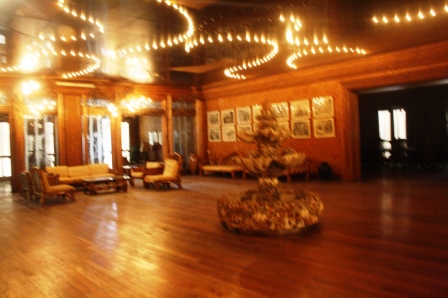
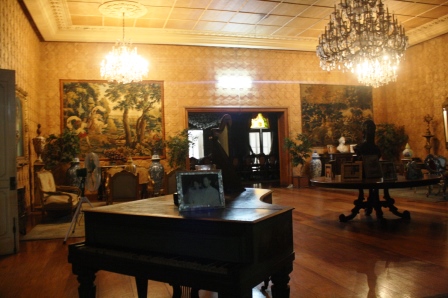
The living room featured dramatic ceiling lights and a fountain made of shells at its center.
I remember looking around and taking in the details one by one.
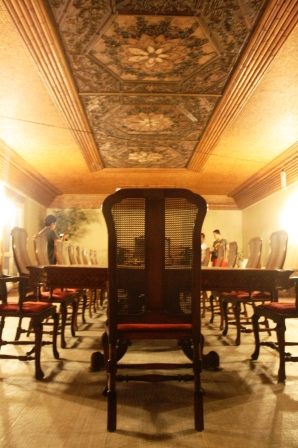
From there, the living room led into a dining area with an exceptionally long table. It looked as though it could easily accommodate a state dinner.
Above it, an intricate floral mosaic covered the ceiling.
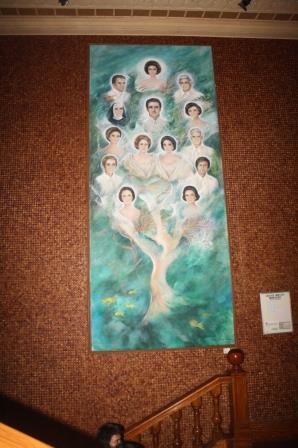
Between the chapel and living room stood a large staircase. At its bottom was a huge Egyptian mirror, while the first landing displayed a painting of Imelda’s family tree.
Everywhere we turned, another elaborate detail waited.
The place was not subtle about the lifestyle it represented.

Upstairs to an Opulent Ballroom
We continued upstairs, and the grandeur became even more apparent.
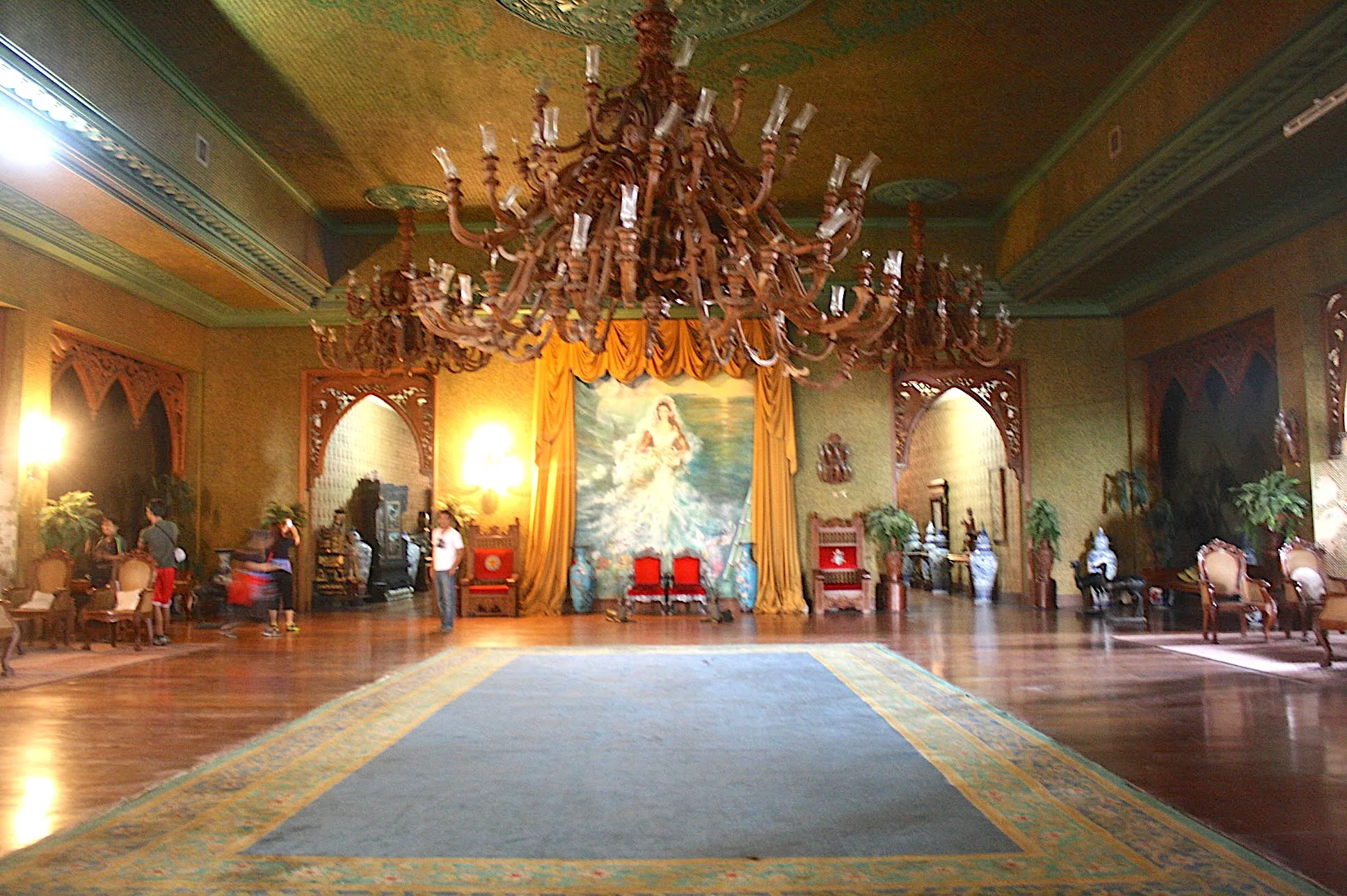
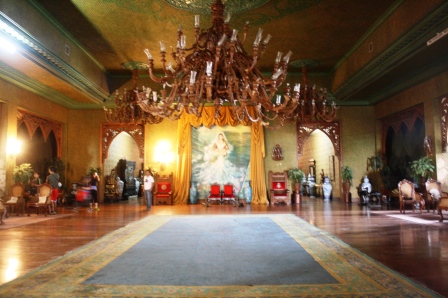
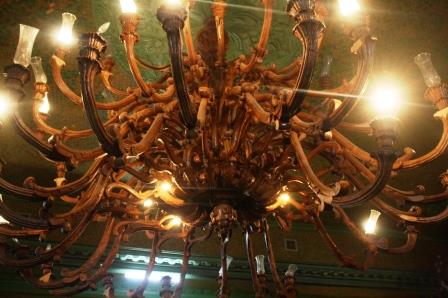
An expansive ballroom welcomed us with enormous artistic chandeliers. Their size and design immediately commanded attention.
The second-floor rooms were also bigger and more opulent.
Then we entered Imelda’s room.
It was easily the most luxurious room in the shrine.
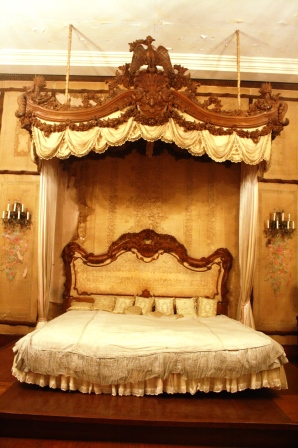
A canopy bed dominated the space. The bathroom featured a jacuzzi, a walk-in closet, a canopied shower, and a sink specially designed for washing hair.
I could only imagine how different this must have felt from the world outside.
Inside, everything spoke of comfort and excess.
Outside, Yolanda had left thousands of people struggling to rebuild their lives.
A Glimpse Into the Marcos Era
The Sto. Nino Shrine once served as one of the presidential rest houses during the Marcos era. Although the Marcos family reportedly never actually lived there, Ferdinand Marcos had the property built for his wife, Imelda, who was born in Tacloban.
The building therefore offers visitors a glimpse into the lifestyle associated with the Marcos family during that period.
At the same time, its religious character remains unmistakable.
Religious icons appear throughout the shrine, fitting its identity as the Sto. Nino Shrine. At its heart stands the chapel and the image of the Holy Child.
The combination makes the place unlike most museums.
It is part chapel, part grand residence, and part historical time capsule.
Inside the Shrine, Outside the Storm
As fascinating as the interiors were, I kept thinking about what waited beyond the walls.
Only weeks earlier, Yolanda had unleashed its fury on Tacloban.
Families had lost their homes. Communities had suffered tremendous damage. People were still trying to make sense of what had happened while finding ways to move forward.
Inside the shrine, however, we saw a completely different world.
We saw chandeliers, mosaics, luxurious bedrooms, grand furniture, and enormous rooms.
The contrast was striking.
The Sto. Nino Shrine showed us the extravagance associated with a powerful family during one chapter of Philippine history. Just outside its doors, we saw ordinary Taclobanons facing the harsh reality left behind by one of the country’s most devastating typhoons.
That contrast stayed with me throughout our visit.

The Sto. Nino Shrine That Survived Yolanda
The Sto. Nino Shrine reopened on December 8, 2013, after recovering from the damage caused by Yolanda.
For me, its reopening carried a meaning beyond simply welcoming visitors again.
The shrine had endured.
So had Tacloban.
When we finally stepped outside, the battered palm trees were still there. Their appearance reminded me of the storm, but somehow, they also made me think about resilience.
They had bent under the force of Yolanda, yet they remained rooted.
Perhaps that was what stayed with me most after visiting the Sto. Nino Shrine.
Beyond its grand rooms, religious icons, and glimpse into the Marcos era, the shrine had become part of a city trying to rebuild itself.
We came to see a historical landmark.
Instead, we also witnessed a small story of survival.
And as we left Tacloban that day, I carried with me the hope that this resilient city would rise again, stronger and more determined than before.


Leave a Reply