I first encountered General Douglas MacArthur in the pages of history books. As a celebrated World War II hero, he played a major role in Philippine history. He led American and Allied forces against the Japanese army.
However, I never paid much attention to his life and experiences on Philippine soil.
That changed as I traveled around the country.
In different places, I began encountering traces of General MacArthur. They ranged from an island fortress to a historic Manila hotel and the shores of Leyte. Each visit gave me a glimpse of the man I had only known through history lessons.
As I followed these trails, I realized that history becomes more meaningful when you can actually stand where it happened.
General MacArthur in Corregidor Island
I have visited Corregidor Island three times. Yet, every trip around this tadpole-shaped island fortress reveals another fascinating piece of its history.
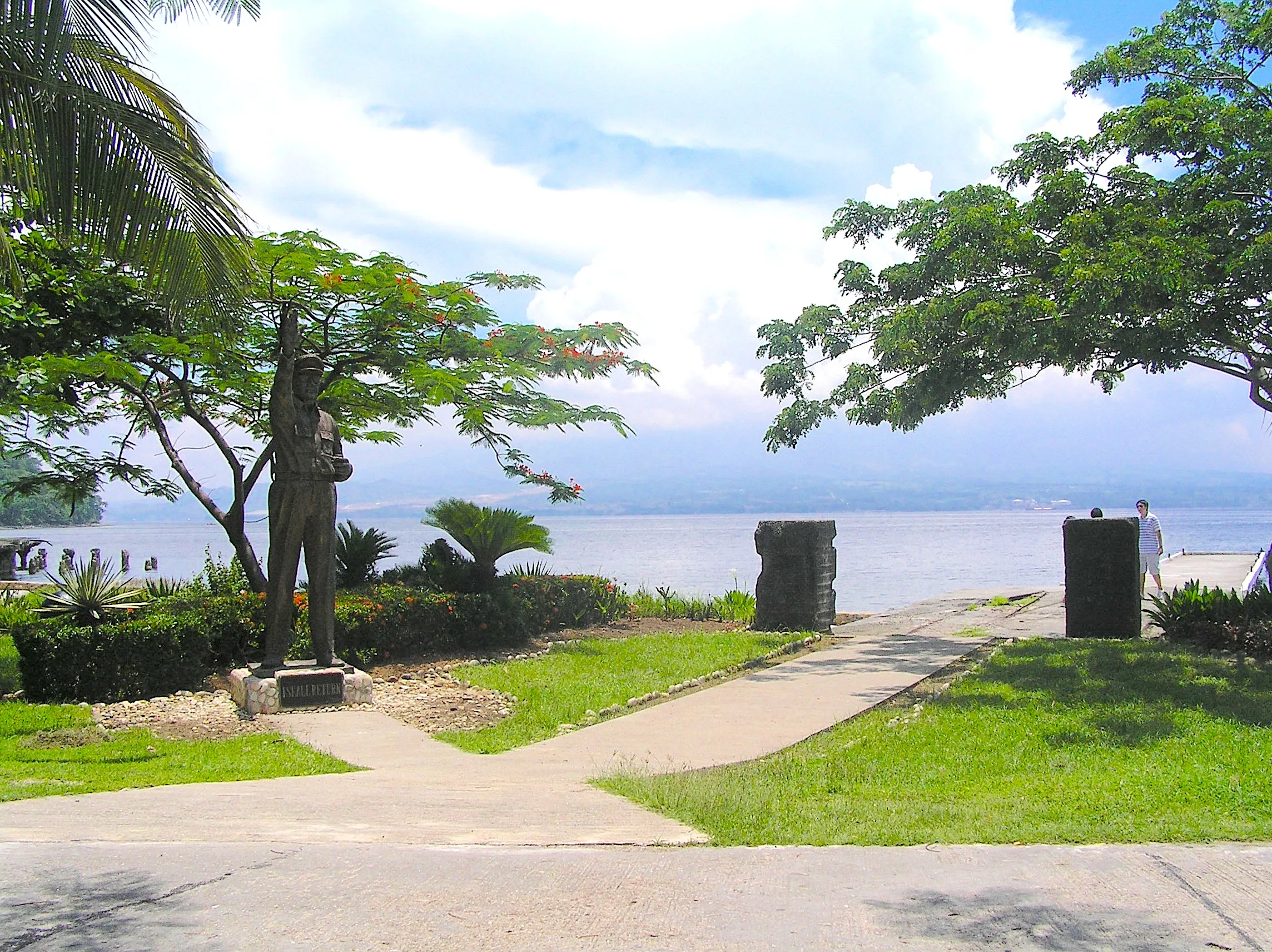
During my second visit, I noticed the large statue of General MacArthur near the Lorcha Dock.
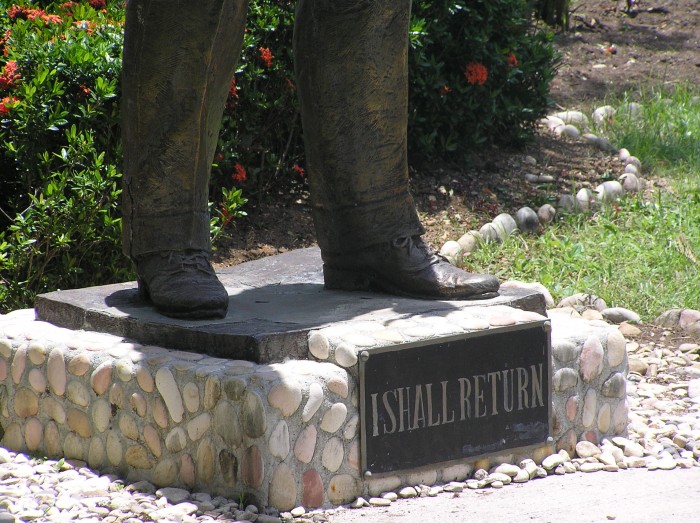
There he stood at Gen. MacArthur Park, his hand outstretched as if welcoming arriving visitors while bidding farewell to those leaving the island. Beside him, an inscription bears his famous words: “I Shall Return.”
The words carry even more weight when you know what happened here.

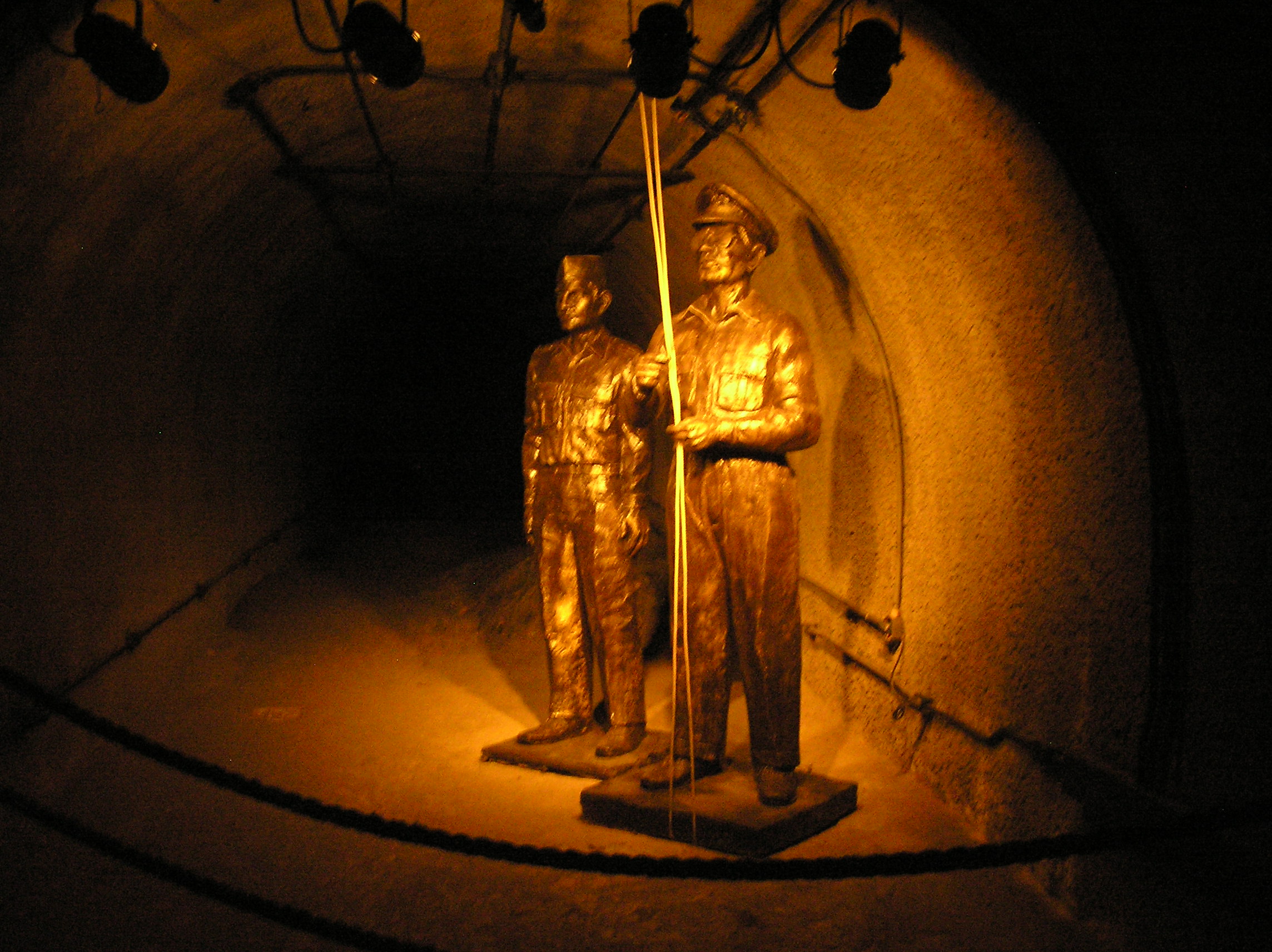
During World War II, Corregidor served as the headquarters of the Allied Forces. General MacArthur established his office inside the Malinta Tunnel before eventually leaving the Philippines for Australia.
It was from Australia that he famously declared, “I Shall Return.”
Today, the Malinta Tunnel remains one of Corregidor’s most compelling attractions. During one of my visits, I watched the light and sound show that portrayed important events inside the tunnel. The presentation also brought to life the difficult years when General MacArthur and his forces fought to defend the Philippines.
Standing inside that historic tunnel made the stories I had read feel much closer.
A Glimpse of General MacArthur at The Manila Hotel
I never imagined that I would actually step inside a suite named after General MacArthur.
The Manila Hotel itself has witnessed more than a century of Philippine history. Its halls have welcomed presidents, celebrities, dignitaries, and other notable personalities. However, when I had the opportunity to work at this prestigious hotel, I also discovered one of its most fascinating stories.
For six years, from 1935 to 1941, General MacArthur and his family lived in the penthouse atop the hotel’s fifth floor.
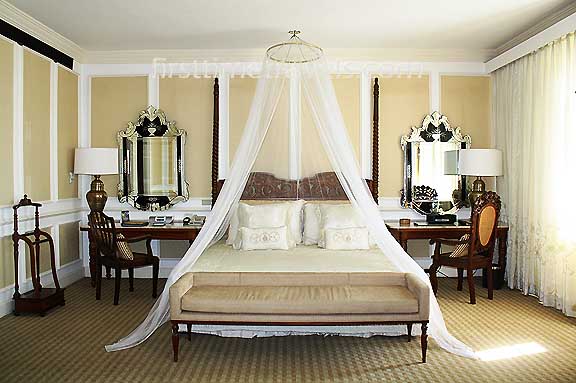
Today, the space is known as the MacArthur Suite.

One of the hotel’s historical accounts offers an interesting detail about how MacArthur’s stay was arranged. To help cover the cost of his suite, he received the honorary title of General Manager. Instead of simply accepting the ceremonial position, however, MacArthur reportedly took an active interest in hotel management and attended monthly meetings.
Even more interestingly, he had a favorite dish at the hotel: lapu-lapu, a grouper fish native to the Philippines, wrapped in banana leaves.
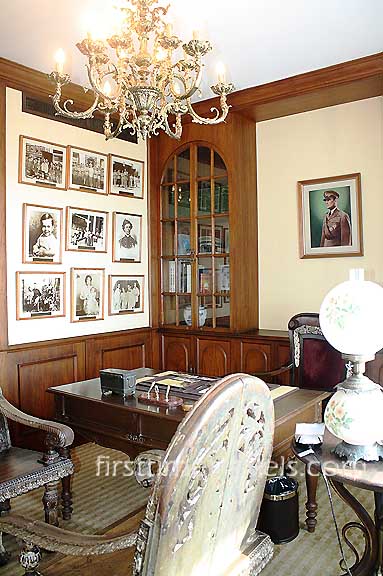
The suite also gives visitors a glimpse into how the general lived during his years in Manila. It features a master bedroom with a dressing room, a guest room, bathrooms, a powder room, a study, and a formal dining room overlooking Manila Bay.
There is also a well-equipped kitchen and a balcony with a beautiful view of the bay.
The suite contains memorabilia associated with General MacArthur, including a military cap and replicas of his medals. It has also hosted prominent guests, including former US President Bill Clinton.
For me, seeing the suite added another dimension to the General MacArthur story. He was not simply a name connected to World War II. For several years, Manila was also his home.
Following General MacArthur to Palo, Leyte
Of all the places connected to General MacArthur, perhaps none felt more significant to me than Palo, Leyte.
Finally, I was able to stand on the ground where MacArthur returned to the Philippines.
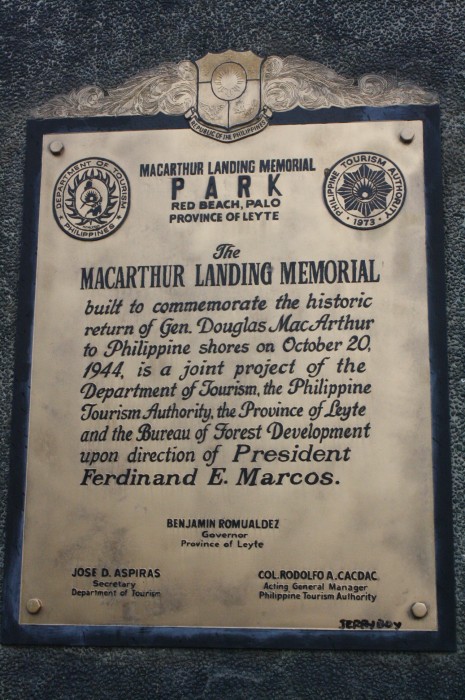
We visited the MacArthur Landing Memorial National Park in Palo during a Volunteer Vacation. Since we were already in the area, we made sure to include this historic site in our itinerary.
Unfortunately, it was raining heavily that day. As a result, we had only a limited time to explore the area.
Still, seeing the monument in person made the visit worthwhile.
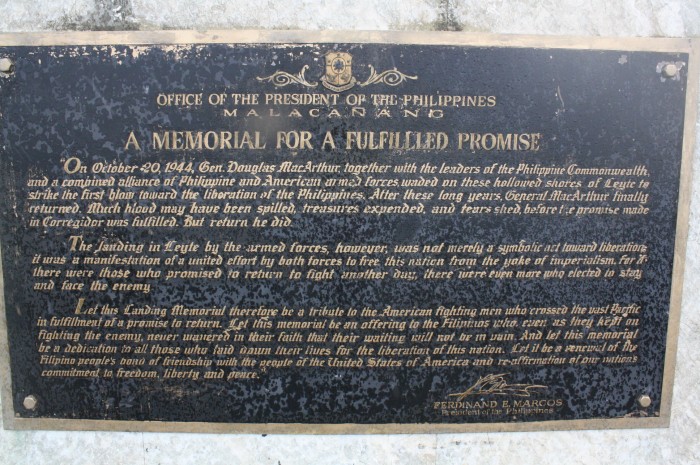
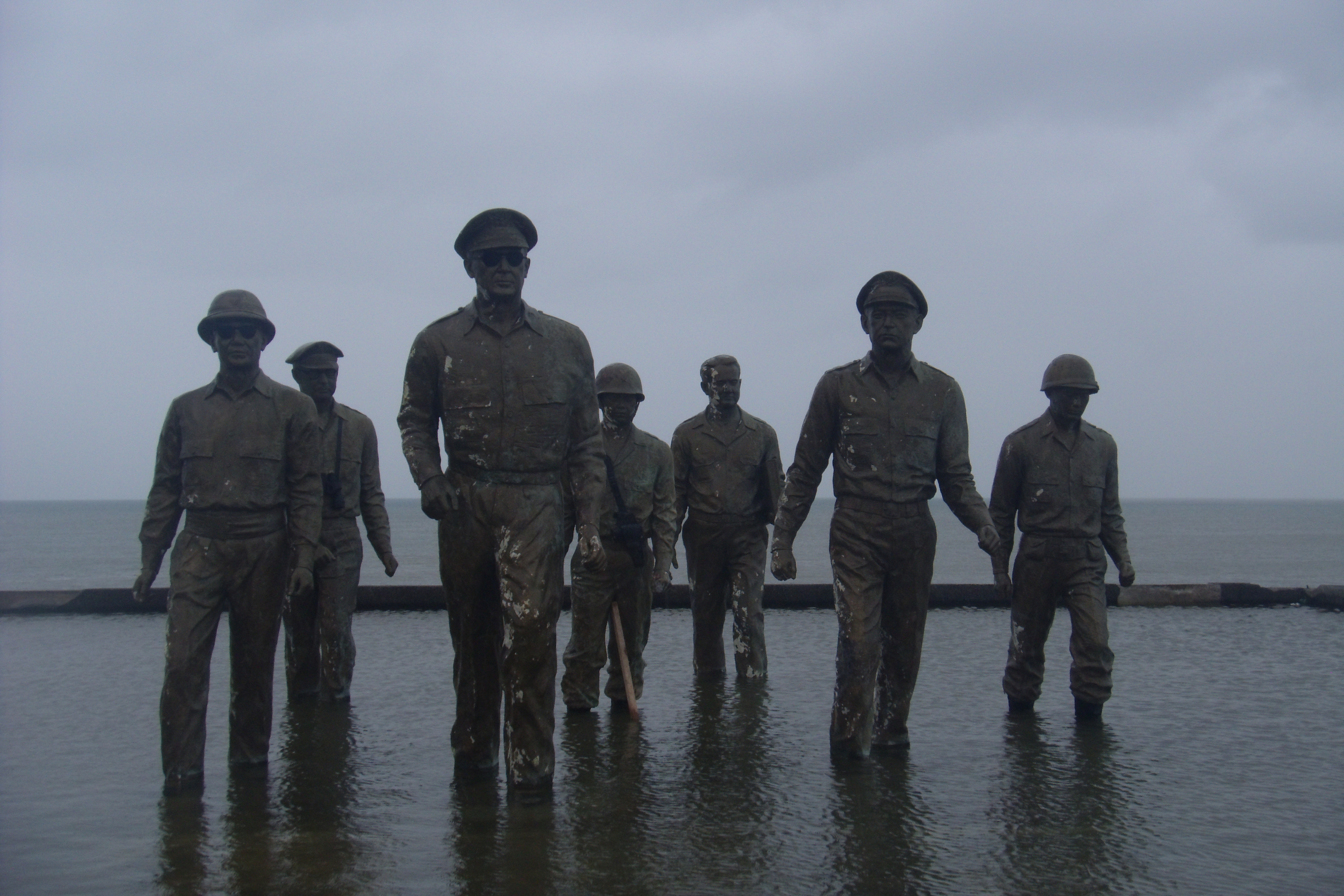
Larger-than-life bronze statues of General MacArthur and six of his men stand along the shore at Red Beach in Candahug, Palo. The monument commemorates the historic landing of the Allied Forces on October 20, 1944.
It was here that MacArthur made his famous return to the Philippines after leaving the country during the war.
The site has also endured its own share of history. When Super Typhoon Yolanda struck the Philippines in 2013, the monument suffered damage, and one of the statues was knocked down. Eventually, the monument was restored, allowing MacArthur and his men to once again stand tall along the Leyte coast.
Even with the rain falling around us, I could not help but pause and imagine what this shoreline must have looked like on that historic day.
Tracing More of The General’s Philippine Story
My encounters with General MacArthur have happened almost by chance.
I did not set out specifically to follow his footsteps. Instead, these stories emerged naturally as I traveled, explored historic places, and included landmarks in my itineraries.
From Corregidor Island to The Manila Hotel and finally to Palo, Leyte, each destination revealed a different side of General MacArthur’s connection to the Philippines.
Corregidor showed me the wartime commander.
The Manila Hotel introduced me to the man who once called Manila home.
Meanwhile, Palo brought me to the place where one of the most memorable moments in Philippine World War II history unfolded.
There are undoubtedly other places in the Philippines where General MacArthur left his mark. I may visit some of them someday. Perhaps, along the way, I will once again chance upon another piece of his story in a place I never expected.
For now, these encounters have reminded me that history is not always confined to books.
Sometimes, you find it in a statue by the sea, a room inside an old hotel, a tunnel beneath an island, or a rainy afternoon on a historic shore.
And sometimes, all it takes is a journey to make the past feel real.


Leave a Reply