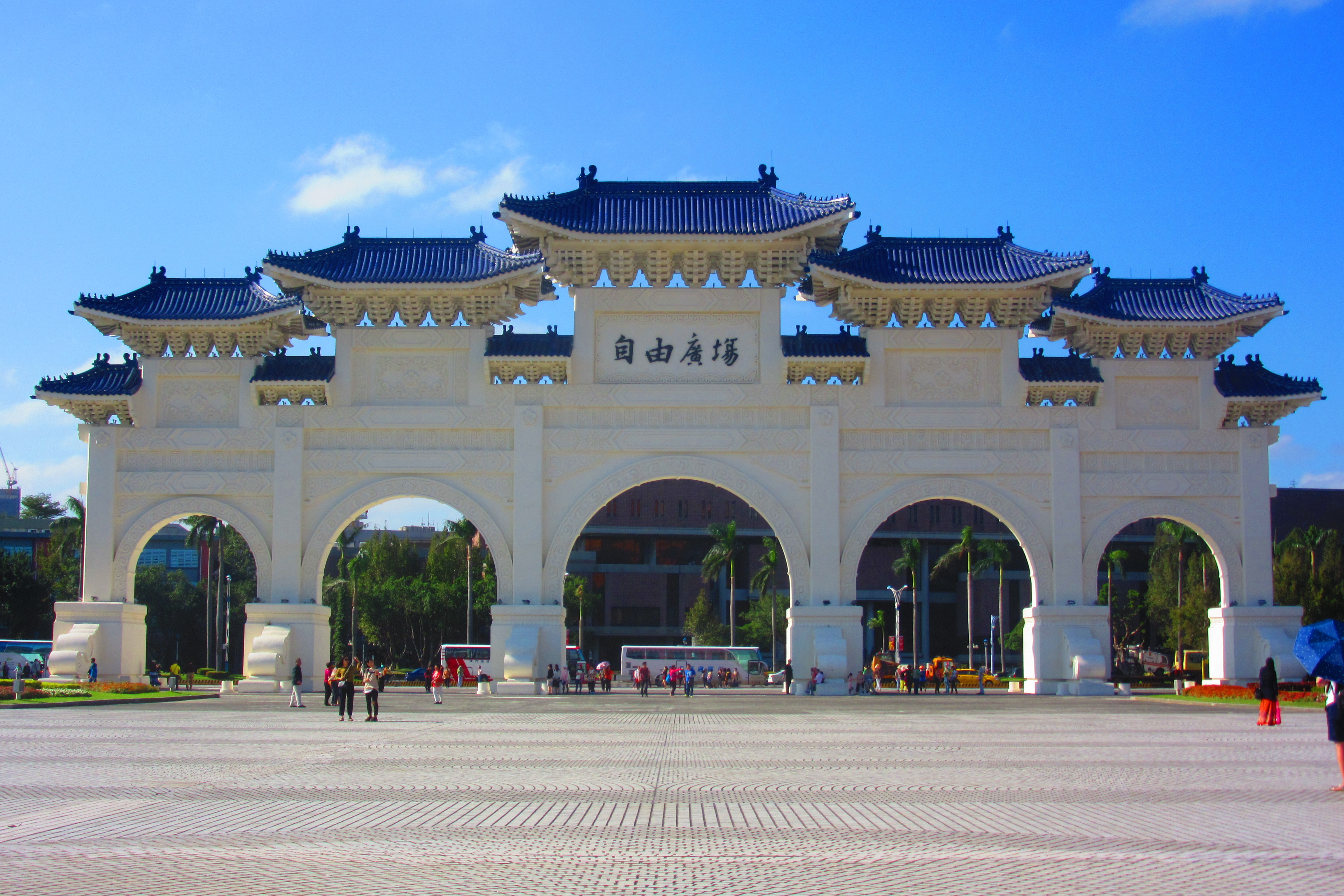
Taiwan has always fascinated me because its story is woven from different eras, cultures, and historical experiences. My visit to the Chiang Kai-shek Memorial Hall in Taipei became more than just a sightseeing stop. It became a reflection of my own journey through Chinese history, connecting the places I had visited before with the story of modern Taiwan.
The island, historically known to Europeans as Formosa, meaning “beautiful island,” has a rich past shaped by indigenous communities, foreign influences, and political transformations. Today, Taiwan is governed by the Republic of China (ROC), which relocated its government to the island in 1949 after the Chinese Civil War between the Kuomintang (KMT) and the Chinese Communist Party.
A Journey That Came Full Circle
I felt that my travels had come full circle when I arrived in Taiwan.
My first trip to China brought me to Guangzhou, a city closely linked to the history of the Kuomintang. It was there that Sun Yat-sen helped establish the foundations of the movement that would eventually become the KMT. As the founding figure of the Republic of China, Sun Yat-sen played a significant role in China’s transition from imperial rule to a republic.
Later, my travels took me to Shanghai, where Sun Yat-sen spent part of his political life, and Beijing, the capital of the People’s Republic of China. I also visited Xi’an, home of the famous Terracotta Army of Qin Shi Huang, who unified China more than two thousand years ago.
Standing in Taiwan, I found myself connecting these historical threads. The island’s story is closely tied to events that shaped modern China, yet it has also developed its own unique identity over the decades.
Arriving at Chiang Kai-shek Memorial Hall
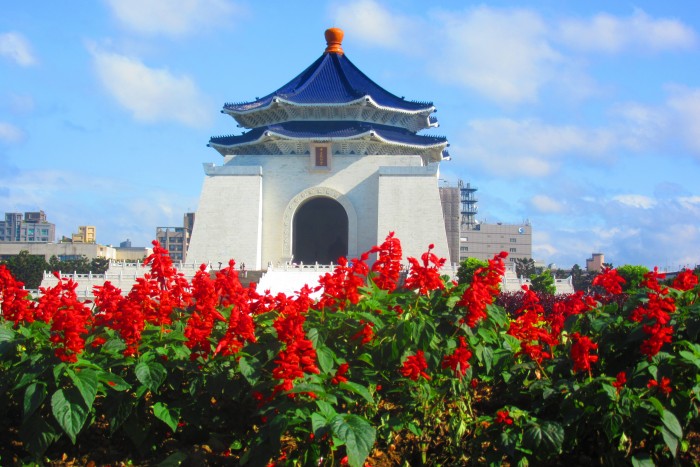
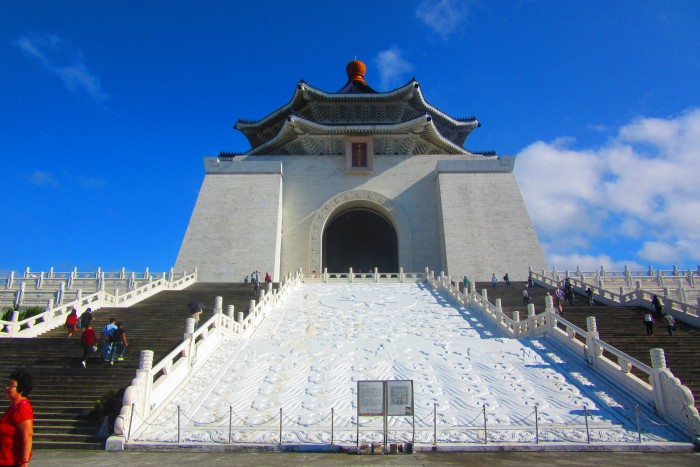
The Chiang Kai-shek Memorial Hall is one of Taipei’s most recognizable landmarks. Built in 1980, five years after Chiang Kai-shek’s death, the monument was created to commemorate his contributions to the Republic of China. Over time, it has also become a place where visitors encounter discussions about Taiwan’s history, democracy, and changing perspectives on its past.
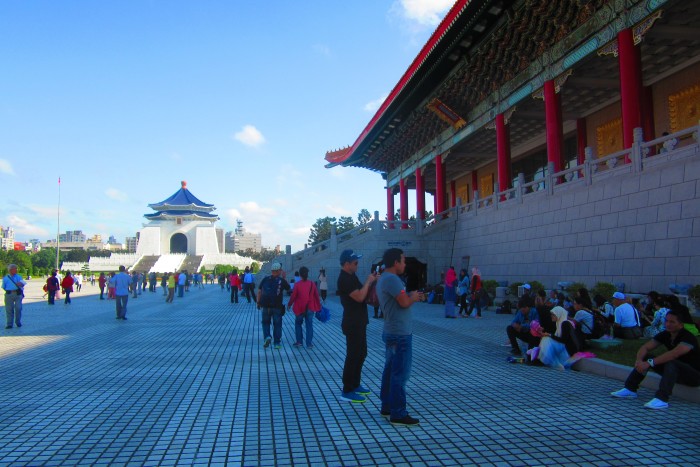
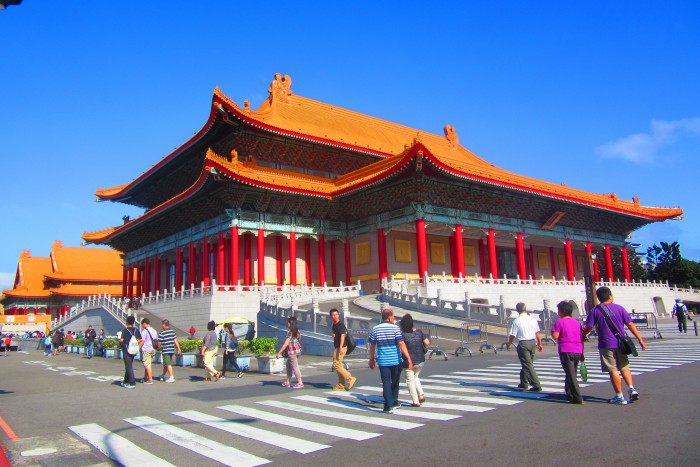
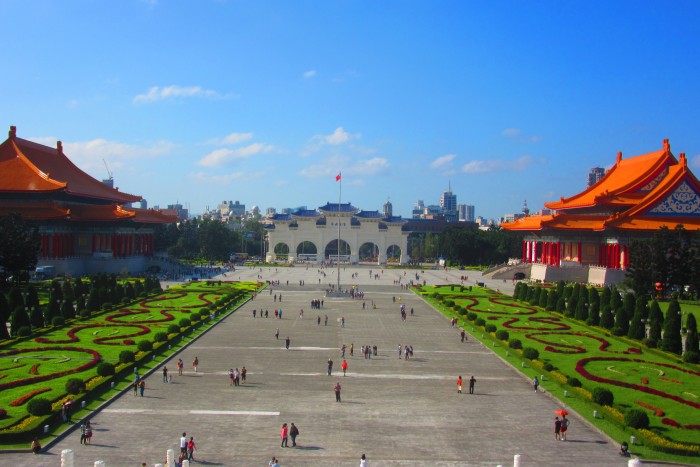
Getting there was easy. We took the Taipei MRT and traveled through either the red or green line before getting off at the Chiang Kai-shek Memorial Hall Station. Upon exiting the station, the grand National Theater immediately caught our attention.
The National Theater stands on the southern side of Liberty Square, with the National Concert Hall facing it across the plaza. Beyond these impressive buildings stood the main memorial hall, creating a vast open space that has become a gathering place for locals and tourists alike.
A Monument of Grandeur and Memory
As we walked across the square, I could already see the silhouette of a large seated figure inside the memorial hall. The scene reminded me of the famous Lincoln Memorial in Washington, D.C., where a monumental statue honors another influential leader in history.
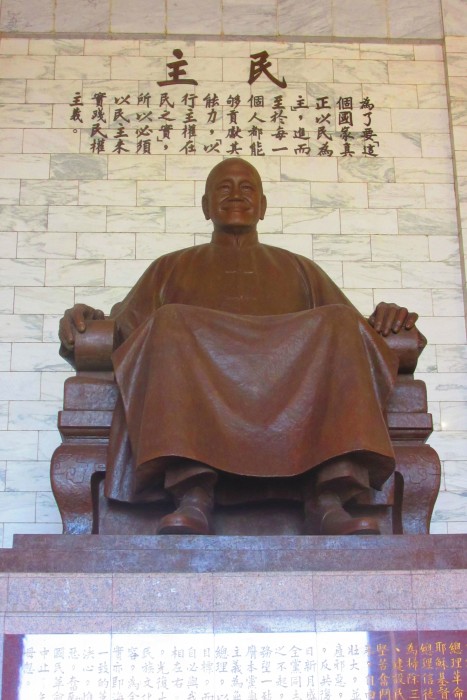
To reach the main hall, we climbed a long flight of steps. At the top, we entered the spacious chamber where a massive bronze statue of Chiang Kai-shek sits peacefully, overlooking the visitors below.
We arrived just in time for the changing of the guards ceremony. The crowd gathered around the entrance as the guards performed their precise movements with discipline and tradition. After the ceremony, we moved closer to view the statue and appreciate the details of the hall.
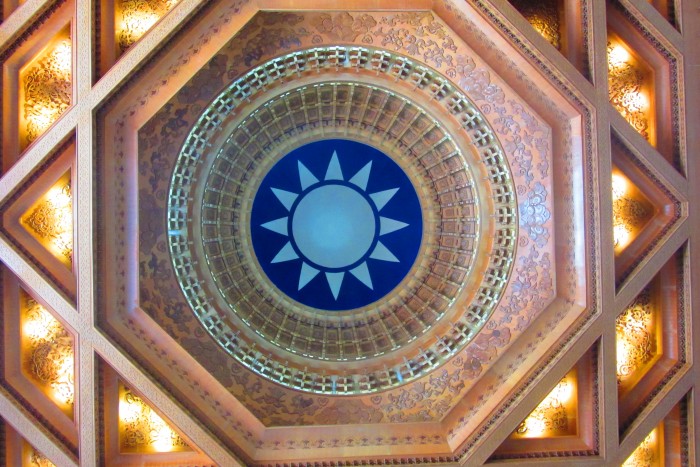
Behind the statue were three Chinese characters representing “Ethics, Democracy, and Science,” values associated with Sun Yat-sen’s political philosophy. Above us, the ceiling displayed an intricate design featuring the sun emblem from the national flag of the Republic of China.
Discovering Stories Beyond the Main Hall
After spending time inside the memorial hall, we explored the exhibits located on the lower floors. The displays featured photographs, personal belongings, and historical materials related to Chiang Kai-shek and the period when the Republic of China government was based in Taiwan.
The exhibits provided a glimpse into Taiwan’s political history while also showing the complexities surrounding Chiang Kai-shek’s legacy. For many Taiwanese people, his role remains a subject of different interpretations, reflecting the island’s evolving conversations about history and identity.
As we continued walking downstairs, we came across two women practicing calligraphy and painting. Their quiet concentration added a cultural touch to our visit.
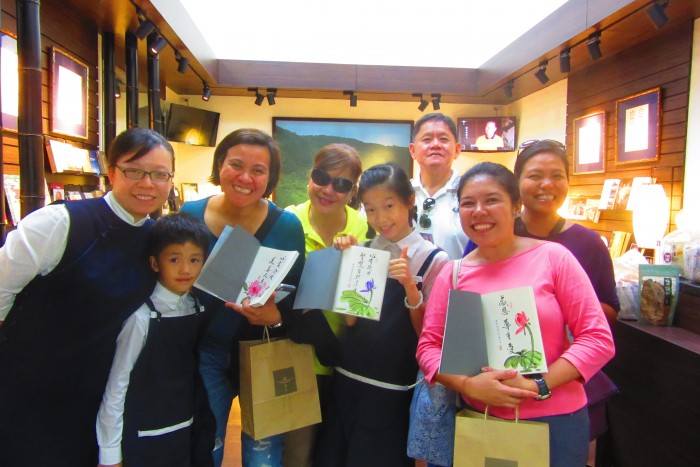
Soon after, a young woman approached us and offered free bookmarks. She explained the meanings behind the Chinese inscriptions written on them, making the simple souvenir much more meaningful. We learned that she was connected with the Jing Si Books and Café, an initiative of the Tzu Chi Foundation.
I was already familiar with Tzu Chi because I encountered the organization when I volunteered in Tacloban, Leyte, after Typhoon Yolanda (international name: Haiyan). At that time, the foundation helped survivors by distributing essential goods and financial assistance.
We browsed through their books and magazines and eventually bought inspirational writings that reflected values of compassion and kindness.
A Peaceful Afternoon at Liberty Square
The ground floor of the memorial complex offered more than historical exhibits. It also had an information center, souvenir shops, restaurants, and other visitor facilities.
Eventually, we stepped outside into the surrounding park. The atmosphere changed completely. The grand architecture gave way to a peaceful landscape filled with trees, birds resting on branches, and locals enjoying their afternoon.
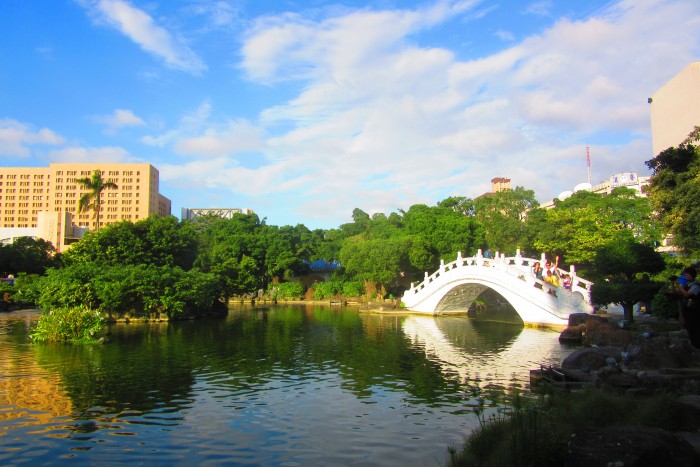
Some families were having picnics. Others walked leisurely with their dogs. Near a pond with a small bridge, we stopped to take photos and enjoy the calm surroundings.
As the sun began to set, more visitors arrived at Liberty Square. The area transformed into a lively meeting place where people gathered, relaxed, and appreciated the beauty of the historic surroundings.
Reflecting on Taiwan’s History
Visiting the Chiang Kai-shek Memorial Hall was not simply about seeing a famous landmark. It was an opportunity to walk through a chapter of history that continues to shape Taiwan today.
The memorial represents different meanings to different people. For some, it honors a leader who played a major role in the Republic of China’s history. For others, it serves as a place to reflect on Taiwan’s political evolution and changing understanding of the past.
For me, the experience was a meaningful continuation of my travels through Chinese history. From Guangzhou to Beijing, Xi’an, Shanghai, and finally Taiwan, each destination revealed another piece of a much larger story.
Walking through Liberty Square reminded me that history is not only found in books and museums. Sometimes, it is experienced through the places we visit, the people we meet, and the stories we carry home.
No.21, Zhongshan S.Rd., Zhongzheng Dist.
Taipei City 10048, Taiwan (R.O.C)
TEL:886-2-2343-1100
http://www.cksmh.gov.tw/eng
For more photos of our visit in the CKS Memorial Hall, check out my Facebook album.
For a complete list of blog articles on my 2015 Taiwan trip, visit this introductory post.

Leave a Reply